
Q&A with Phil Edmondson, VP of US Commercialization
We’re pleased to introduce a new Q&A series spotlighting the senior leaders shaping Orthocell’s strategy, innovation and global growth. Each edition offers insight into the people driving our mission forward.
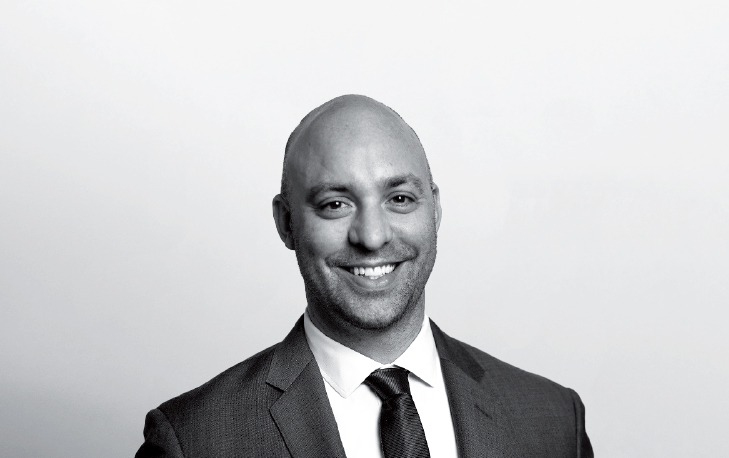
Phil Edmondson, VP of US Commercialization
Mr Edmondson is an award-winning medical affairs professional, who excels in creating product awareness, building advocacy and implementing successful medical education programs that contribute to sales growth.
Tell us about your background and what brought you into the peripheral nerve field?
I’ve spent close to two decades working across medical devices and biologics, with more than half of that time focused specifically on peripheral nerve. It’s a highly specialised area of microsurgery that demands exceptional skill from surgeons, and that environment has always appealed to me.
Earlier in my career I served in the US Army as Military Police, which shaped my approach to leadership. I wanted structure, discipline and responsibility – not just for myself, but for the greater good. Those values really shaped who I am professionally.
What attracted you to Orthocell and Remplir™?
When I first met Orthocell CEO and MD Paul Anderson, what stood out immediately was how open and collaborative he was. He listened, asked questions, and genuinely wanted input. Although Orthocell is well established in Australia, the US represented a new chapter, and that sense of building something meaningful from the ground up really appealed to me.
What really sealed it for me was the technology. We sought early feedback from some of the most influential peripheral nerve surgeons in the country, and the response was unanimous. Surgeons were excited by something genuinely new entering a market that hasn’t seen much change in nearly a decade. That validation made it clear that Orthocell had something worth standing behind.
What does your day-to-day entail as the VP of US Commercialization?
My role is focused on the non-commercial work that’s required to build a credible presence in the US That includes professional education, society engagement, working with key opinion leaders, compliance, and supporting early data generation such as case series and clinical evaluation.
I draw heavily on my previous experience across national accounts, academic institutions and medical affairs. Over many years I’ve built strong, trusted relationships with peripheral nerve surgeons across the US, and that network helps support awareness and early engagement for Remplir.
We work very closely as a team, but we’re deliberate about keeping clear separation between commercial and non-commercial activities. That separation is essential in the US to ensure compliance and avoid any perception of inducement.
It is still early in the launch phase of Remplir in the US – what feedback are you hearing from surgeons about the product?
Overall, the feedback has been very positive. The US market has effectively had one dominant player for close to a decade, and there’s been a real appetite among surgeons for something new – new characteristics, new evidence and more options for their patients.
We’re still early in the hospital approval process, which naturally brings longer timelines. But where Remplir has been used, the response has been really strong. Surgeons see clear differentiation and want to understand how it fits into their practice.
Walk us through the next 12 months of the US rollout?
I think about this as a progression — awareness, access, adoption and advocacy.
Right now we’re very much in the awareness phase – educating surgeons, supporting educational forums and building a strong presence within professional societies. Over the next year, the goal is to move toward adoption, where surgeons are using Remplir regularly and confidently because they understand when and how it fits.
From there, the goal is advocacy. We’re looking for surgeons sharing their own experiences with peers, presenting data, and contributing to the body of evidence. Ultimately, I want Orthocell to move from being seen as “a small Australian story” to a respected leader in the US nerve repair landscape.
What does patient impact mean to you personally?
Nerve injury is a quality-of-life story. When someone loses sensation or function, the consequences ripple through their entire life – work, independence, relationships, confidence. Seeing patients regain movement or feeling after years of impairment is incredibly powerful.
Much of Orthocell’s long-term data comes from Australia, and the outcomes are compelling. My goal is to build that same depth of patient storytelling in the US with American surgeons and American patients, so people understand not just the data, but the human impact of recovery.
What excites you most about the opportunity ahead for Orthocell?
For me, it all comes back to impact – for patients, for surgeons and for the company. We’re shaping the US presence from the ground up, establishing credibility in a very specialised field, and building something that lasts.
We have a strong product, a strong leadership team and a clear plan. If we execute well, I believe the next few years will redefine how Orthocell is perceived in the US and I’m here to make sure we earn that position.